
Iliotibial Band Syndrome with Dr. Chase Waldrup
If you’re an active runner, cyclist, or hiker, you probably know the sharp pain on the outside of the knee that cuts a workout short. This is the hallmark of IT band syndrome — a condition that can sideline training and make everyday movement uncomfortable.
Stretching and foam rolling are a reasonable first step, but on their own they rarely solve the problem for good, because they don’t address what’s actually driving the pain. What caused your IT Band Syndrome?
What Is IT Band Syndrome?
The iliotibial (IT) band is a thick band of fascia running down the outside of the thigh, connecting the hip to just below the knee. It helps stabilize the knee and assist with hip movement.
Iliotibial Band Friction Syndrome, or IT Band Syndrome, is a common problem that can cause pain in the outside of the thigh or knee. This occurs when the tensor fascia latae (TFL) muscle at the hip becomes overactive. The TFL connects into the non-contractile IT band which attaches just below the knee and when it is tight or overactive the tension can translate and cause friction and irritation of the tissues in this area. Correcting this problem involves strengthening and stabilizing of the hip abductors, most notably the gluteus medius (GM).

IT Band Syndrome is common in runners but can present in many activities. It can occur with simply walking or getting up and down out of a chair. When taking a step, doing a squat or simply getting up from sitting the hip abductors keep the knee from diving inward, which is a vulnerable position for the ligaments of the knee. The TFL abducts the hip but also rotates it inward and flexes it forward. The GM abducts and rotates out and can become underactive or weak. It is usually found to be weak and underactive in those with IT Band Syndrome. Strengthening the GM helps to reduce stress and strain on the TFL, thus reducing friction from the IT band. Stretching and foam rolling the IT band or the TFL may feel helpful but it will not address the root of the problem.
What Does IT Band Syndrome Feel Like?
The pain shows up predictably with activity and eases quickly once you stop — a useful clue that separates it from more serious joint damage. Common signs:
- Sharp or burning pain on the outside of the knee, usually a few minutes into a run
- Pain that worsens running downhill or with a longer stride
- A snapping or popping sensation as the knee bends
- Pain that fades soon after you stop the activity
What Causes IT Band Syndrome?
IT band syndrome is rarely one thing — it’s usually a mix of training load, movement mechanics, and muscle imbalance. A chiropractic evaluation looks at the full kinetic chain to find which combination is at play for you:
- Training errors — sudden mileage increases, aggressive hill work, or running on banked surfaces are common, well-recognized triggers.
- Movement mechanics — flat feet, hip drop, or the knee caving inward during your stride all increase compressive force on the band.
- General health factors — a large-scale study of over 76,000 runners found that a history of allergies and a higher chronic-disease burden were also independent risk factors for IT band syndrome, meaning training and mechanics aren’t the whole picture.
- Muscle imbalance — this is usually the real root cause.
Diagnosis — and Ruling Out Other Causes
A Doctor of Chiropractic or physical therapist will review your training history and pain pattern, then run a movement and strength assessment, often including specific orthopedic tests to confirm the diagnosis.
This step matters because lateral knee pain isn’t always IT band syndrome — a meniscus tear, LCL sprain, or patellofemoral pain can look similar. Visible joint swelling, in particular, usually points to something other than the IT band, so a proper evaluation matters before you build a recovery plan.
Treatment For IT Band Syndrome
Rest and self-care can quiet symptoms temporarily, but they don’t fix the mechanical cause — which is why IT band syndrome tends to come back once you resume training. A systematic review found treatments such as manual therapy paired with targeted strengthening, is genuinely effective for runners, provided it addresses the underlying biomechanics rather than just the symptom.
Load management first. Complete rest isn’t the goal — it doesn’t build tissue capacity. Instead, research supports staying under your pain threshold: lower mileage, flatter routes, or cross-training on a bike or in the pool while things calm down.
Strengthening is the real fix. Hip strengthening — especially the glute medius — is what corrects the mechanical root cause and keeps the pain from returning.
Manual therapy accelerates it. In a chiropractic setting, soft tissue work, myofascial release, and joint adjustments — combined with strengthening — are more effective than either approach alone. Foam rolling and stretching can offer short-term relief, but a controlled trial found their effect on the band’s actual stiffness is limited — which is exactly why professional manual therapy and strengthening get better, longer-lasting results than self-treatment alone.
Dealing with lateral knee pain right now? Schedule an assessment with our team and get a personalized recovery plan instead of guessing your way through it.
Exercises to Start With
Clamshells, side-lying hip abduction, and glute bridges are a great entry point for isolating the hip abductors without aggravating the knee. Targeted rehab exercises — especially for runners — are well-supported in the research.
Dr. Chase Waldrup on these exercises:
The exercises in the above video will help to strengthen and stabilize the hip by strengthening the gluteus medius. These exercises should not cause any pain but if they do you should discontinue them and see your provider to see if there is something else going on with your knee or hip. These exercises a great first step but if you are an athlete or do moderate activity, like running, several times a week then more standing and activity-specific exercises and some muscle and manual therapy by your provider may be needed to help you get back to moving well, often and pain-free.
Can I Keep Running with IT Band Syndrome?
Often, yes — with gait adjustments and careful load management. Running-form retraining can meaningfully reduce pain: avoid downhill running, stick to level ground, and try increasing your cadence by 5-10%, which shortens your stride and reduces impact and knee rotation. It is important to discuss this with your Physical Therapist before resuming your running or training routine.
How Long Does It Take to Heal?
It depends on how long you’ve had symptoms and how directly the underlying hip weakness gets addressed. Many people see real improvement in 4 to 8 weeks with consistent strengthening and load management; chronic or ignored cases can take longer, especially if the mechanical cause was never corrected.
Frequently Asked Questions About IT Band Syndrome
- What’s the main cause of IT band syndrome? Usually a mix of training overload and hip muscle imbalance — most often a weak gluteus medius paired with an overactive TFL.
- Can it heal on its own? Rest can quiet the pain temporarily, but without correcting the underlying hip weakness, it tends to come back once you resume activity. It is best to consult a Chiropractor or Physical Therapist.
- Is foam rolling enough to fix it? It can offer temporary relief, but it doesn’t correct the hip weakness driving the problem — that takes targeted strengthening and, ideally, manual therapy.
- When should I see a provider? If pain persists, affects your daily walking, or comes with visible swelling — a Doctor of Chiropractic or Physical Therapist can properly evaluate and rule out other causes.
How Can Vida Integrated Health Help With IT Band Syndrome?
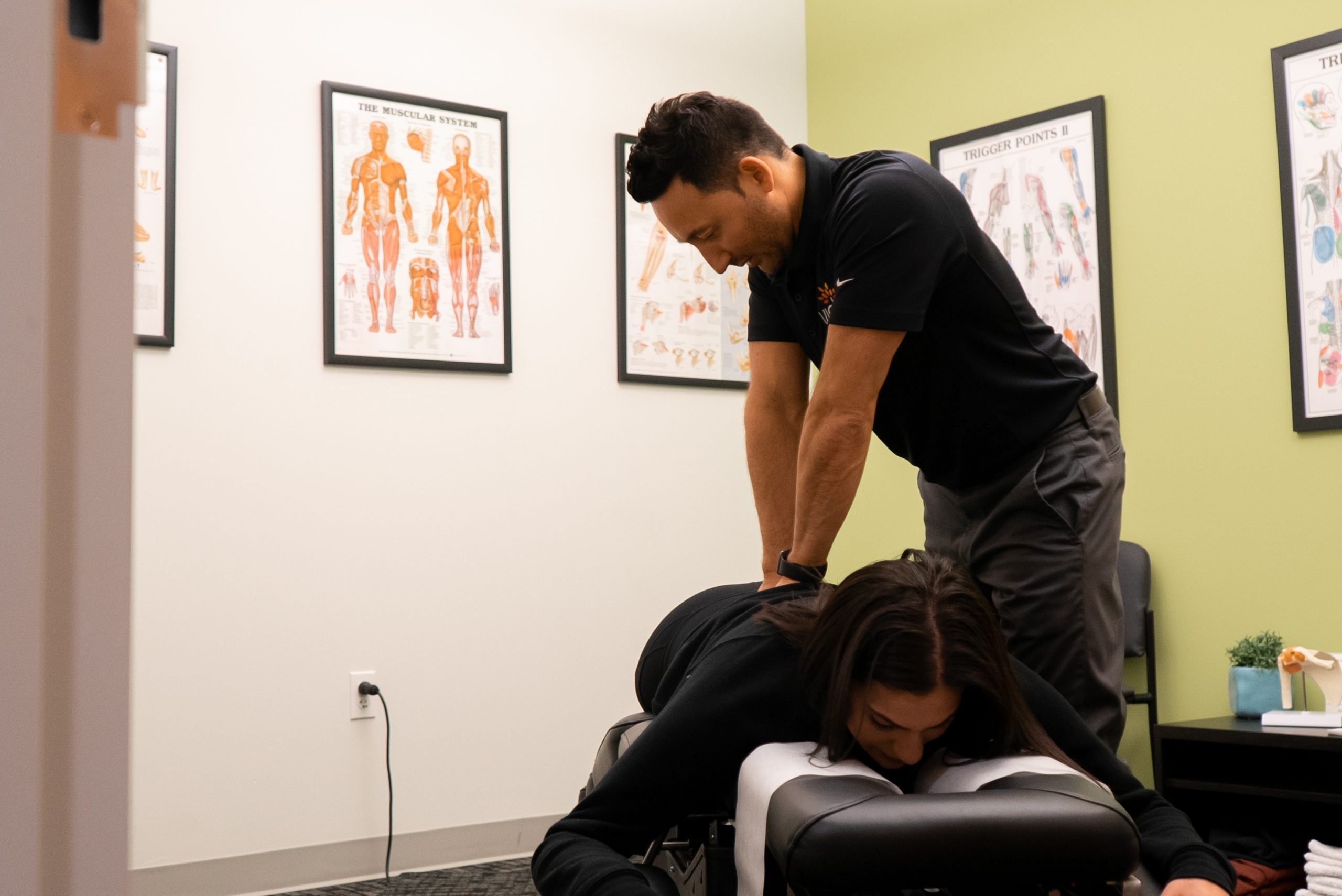
If you are struggling with persistent IT band syndrome, you do not have to navigate the recovery process alone. The integrative team at Vida Integrated Health is equipped to help you overcome this frustrating injury. Our providers can perform a comprehensive biomechanical assessment to identify your specific movement deficits, provide targeted manual therapy to relieve tissue tension, and prescribe a personalized, progressive rehabilitation plan to strengthen your hips and correct your gait.
Don’t let lateral knee pain keep you on the sidelines. Schedule an assessment with our team today →
By Dr. Chase Waldrup, Board Certified Sports Chiropractor, Vida Integrated Health
This blog is for educational purposes only. This information does not replace professional medical advice, diagnosis, or treatment. Consult a healthcare provider or Doctor of Chiropractic for a personalized assessment.

References:
- Christofi, A., Charalambous, C., Michaelides, M., & Papacostas, M. (2024). The effectiveness and characteristics of physiotherapy interventions on adults with iliotibial band syndrome: A scoping review. Journal of Bodywork & Movement Therapies. https://pubmed.ncbi.nlm.nih.gov/39593548/
- Friede, M. C., Innerhofer, G., Fink, C., Alegre, L. M., & Csapo, R. (2022). Conservative treatment of iliotibial band syndrome in runners: Are we targeting the right goals? Physical Therapy in Sport, 54, 44–52. https://pubmed.ncbi.nlm.nih.gov/35007886/
- Hunter, L., Louw, Q. A., & van Niekerk, S.-M. (2014). Effect of running retraining on pain, function, and lower-extremity biomechanics in a female runner with iliotibial band syndrome. Journal of Sport Rehabilitation, 23(2), 145–157. https://pubmed.ncbi.nlm.nih.gov/24226623/
- Khizar, H. F., Siva, S., Ramaswami, S., Hareeshankar, D., Fayaz, A., & Suganthirababu, P. (2026). Effectiveness of manual therapy versus strength training for iliotibial band syndrome on pain and functional recovery in runners: A pilot study. International Journal of Therapeutic Massage & Bodywork, 19(2), 53–63. https://pubmed.ncbi.nlm.nih.gov/42428596/
- Marais, J. V., Jansen van Rensburg, A., Schwellnus, M. P., Jordaan, E., & Boer, P. (2024). Risk factors associated with a history of iliotibial band syndrome in distance runners: A cross-sectional study in 76,654 race entrants — a SAFER XXXIII study. The Physician and Sportsmedicine, 52(6), 568–578. https://pubmed.ncbi.nlm.nih.gov/38618688/
- McKay, J., Maffulli, N., Aicale, R., & Taunton, J. (2020). Iliotibial band syndrome rehabilitation in female runners: A pilot randomized study. Journal of Orthopaedic Surgery and Research, 15, Article 188. https://pubmed.ncbi.nlm.nih.gov/32448384/
- Opara, M., & Kozinc, Ž. (2023). Stretching and releasing of iliotibial band complex in patients with iliotibial band syndrome: A narrative review. Journal of Functional Morphology and Kinesiology, 8(2), 74. https://pubmed.ncbi.nlm.nih.gov/37367238/
- Pepper, T. M., Brismée, J.-M., Sizer, P. S., Jr., Kapila, J., Seeber, G. H., Huggins, C. A., & Hooper, T. L. (2021). The immediate effects of foam rolling and stretching on iliotibial band stiffness: A randomized controlled trial. International Journal of Sports Physical Therapy, 16(3), 651–661. https://pubmed.ncbi.nlm.nih.gov/34123517/
- Sanchez-Alvarado, A., Bokil, P., Cassel, M., & Engel, R. M. (2024). Effects of conservative treatment strategies for iliotibial band syndrome on pain and function in runners: A systematic review. Frontiers in Sports and Active Living, 6, Article 1386456. https://pubmed.ncbi.nlm.nih.gov/39247485/
- WebMD Editorial Contributors. (n.d.). IT band syndrome. WebMD. https://www.webmd.com/pain-management/it-band-syndrome

Your Neighborhood
Health Team
Want to schedule and appointment but unsure about your coverage? Easily find out by using our contact us form. We will check your coverage and send you the results!
Contact Us
Can Chiropractic Care Boost Circulation and Immunity During the Cold Season?

How To Eat Healthy During Summer Travel

Can a Chiropractor Help With TMJ?

© 2022 Vida Integrated Health. All Rights Reserved.
This website uses cookies for Marketing Purposes. To learn more, see our Privacy Policy.
CONNECT
LOCATIONS
Seattle
Ravenna
Bellevue
Kirkland
Everett
Hi DR
My name is Moayad, am 26 years old and i live in Sweden.
I do a lot of inlines skating like everyday for 4-5 hours without any streching Before and after, ive been doing this since i was a kid without any problems. but from last summer i cant skate at all i have pain in my knee all the time and i tried all kind of treches i dont know what to do now its been a year. this pain doesnt leave me alone.
Hi. My name is Mary and I live in the United States. I am suffering from mild to moderate discomfort in my left outer thigh area. I am very physically active due to my job and my once-a-week 2 hr. tennis playing. I would like to know if you would be able to help me.
Thank you in advance.
Mary Meyer