
Why Root-Cause Medicine Looks at the Whole Person
If you’ve ever waited 45 minutes to see your doctor, spent seven minutes in the exam room, received a prescription, and left without anyone asking about your sleep, nutrition, exercise habits, stress levels, or relationships, you’re not alone.
In fact, that experience has become the norm. And it’s one of the reasons so many people feel frustrated with healthcare today.
As a sports chiropractor and the CEO and founder of Vida Integrated Health, I have spent more than 20 years caring for patients, building healthcare teams, and studying healthcare systems around the world. My journey has taken me from practicing in Canada, Peru, and Brazil to building integrated healthcare clinics throughout the Pacific Northwest.
During that time, I’ve witnessed some of the most remarkable advancements in medicine. We have access to technologies and treatments that previous generations could only dream about. We can sequence genomes, identify disease risks years before symptoms appear, and perform procedures that save lives every day.
Yet despite all of these advancements, many patients are struggling more than ever.
Chronic disease continues to rise. People are overwhelmed, exhausted, inflamed, and searching for answers. They bounce from provider to provider, specialist to specialist, collecting diagnoses and prescriptions along the way, but often never discovering why they developed those health challenges in the first place.
The question that has driven much of my career is simple: Why do we have some of the most advanced medical technology in history, yet so many people still feel lost in the healthcare system?
The answer, I believe, lies in how we deliver care.
The Problem Isn’t the People. It’s the System.
Modern medicine is extraordinary. If you’re in a serious car accident, suffer a heart attack, develop pneumonia, or need emergency surgery, there is no better place to be than within our conventional healthcare system.
The system excels at acute care. But chronic disease is different.
When someone is struggling with fatigue, brain fog, metabolic dysfunction, chronic pain, digestive issues, autoimmune disease, or declining performance, the answers are rarely found within a single organ system. Unfortunately, that’s how healthcare is often organized.
One physician manages blood pressure.
Another addresses digestive issues.
A third treats joint pain.
A fourth monitors hormone levels.
Each provider may be excellent at what they do. The challenge is that they often work independently of one another.
Patients become the messengers, carrying information from one office to the next and hoping someone eventually connects the dots.
Too often, no one does.
The result is fragmented care that focuses on symptoms instead of understanding the bigger picture.
What Sports Medicine Taught Me About Healthcare
One of the most important lessons I learned didn’t come from a classroom or a textbook. It came from the locker room.
As a sports chiropractor working with athletes, I had the opportunity to observe how elite sports organizations manage health and performance.
Most people assume the orthopedic surgeon is leading the medical team. In reality, the quarterback of the healthcare team is often the athletic trainer. They oversee the athlete’s entire health picture while coordinating a team of experts that often include the primary care sports medicine physician, physical therapists, chiropractors, massage therapists, strength coaches, nutritionists, psychologists, and orthopedic specialists.
Everyone communicates. Everyone collaborates. Everyone understands the plan. Most importantly, everyone shares the same goal. Helping the athlete perform at their absolute best.
There are no silos. There are no competing treatment plans. There is one team focused on one person.
Watching this model made me ask a simple question: Why should professional athletes be the only people who benefit from this level of coordinated care?
If collaboration helps elite athletes stay healthy, recover faster, and perform better, why shouldn’t families, executives, parents, retirees, and everyday people have access to the same approach?
That question became the foundation for what we built at Vida.
The Locker Room Model for Everyday Life
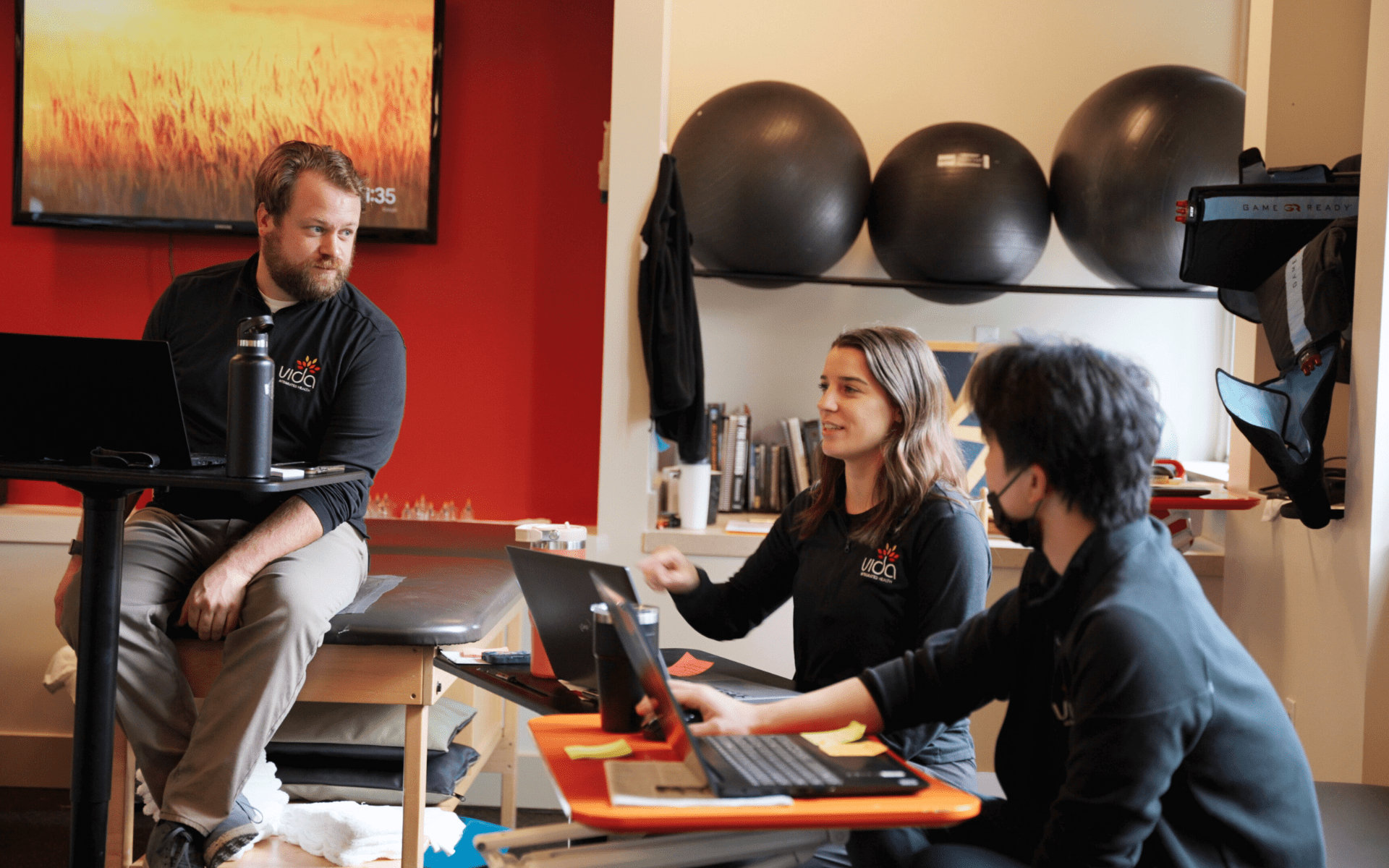
At Vida, we’ve worked to recreate the collaborative environment found in professional sports organizations. Not because everyone wants to run a marathon or play professional sports. But because everyone deserves a healthcare team that communicates and works together.
When a patient walks through our doors, we don’t ask, “Which department should handle this?” We ask, “What does this person need to become healthier?”
Sometimes that means chiropractic care.
Sometimes physical therapy.
Sometimes acupuncture.
Sometimes nutrition support.
Sometimes functional medicine.
Sometimes massage therapy.
Often, it’s a combination.
For example, someone with chronic low back pain may need immediate treatment from a chiropractor or physical therapist to restore movement and reduce pain. At the same time, a functional medicine provider may identify systemic inflammation, poor sleep, metabolic dysfunction, or nutritional deficiencies that are impairing recovery.
Both approaches matter.
The structural issue matters.
The biochemical issue matters.
The lifestyle factors matter.
When we address all of them together, outcomes improve dramatically. That’s the power of the locker room model.
Looking Beyond Symptoms
One of the greatest misconceptions in healthcare is the belief that symptoms are the problem. In reality, symptoms are often signals.
Pain, fatigue, brain fog, digestive issues, and weight gain are not necessarily the disease itself. They are often messages from the body indicating that something deeper needs attention.
Functional medicine is built around that principle. Instead of asking, “What medication matches this diagnosis?” It asks:
- Why is this happening?
- Why is energy low?
- Why is inflammation elevated?
- Why are hormones imbalanced?
- Why is recovery impaired?
- Why is metabolic health declining?
Answering those questions requires looking at the whole person.
- Sleep
- Nutrition
- Movement
- Stress
- Relationships
- Environment
- Genetics
- Mindset
These factors influence nearly every aspect of human health and performance. When we ignore them, we miss the root cause. When we address them, remarkable things can happen.
The Future of Healthcare Is Personalized
One of the most exciting developments in healthcare is our ability to identify risks long before disease develops. Historically, healthcare has been reactive.
We wait for symptoms. We wait for disease. Then we intervene.
Today, we can do much better.
Advanced diagnostics allow us to identify subtle changes years before they become major problems.
- Body composition analysis can reveal dangerous visceral fat despite a normal body weight.
- Advanced cardiovascular testing can identify risk before a heart attack occurs.
- Genetic testing can help personalize nutrition, exercise, and prevention strategies.
- Continuous monitoring gives us insights that were impossible just a decade ago.
These tools don’t replace good healthcare, they enhance it. They allow us to move from disease management to health optimization. From reaction to prevention. From guessing to precision.
Investing in Your Golden Decade
As I’ve gotten older, my perspective on healthcare has changed. Most people focus on living longer. I think we should focus on living better. The goal isn’t simply to add years to life. The goal is to add life to years.
I often talk about what I call your “Golden Decade”—the final ten years of your life. Will those years be spent traveling, hiking, playing golf, chasing grandchildren, and enjoying life? Or will they be spent managing preventable chronic disease? The choices we make in our 40s, 50s, and 60s largely determine that outcome.
That’s why prevention matters. That’s why root-cause medicine matters. And that’s why building the right healthcare team matters.
Taking Control of Your Health
The knowledge exists. The technology exists. The science exists.
What is often missing is a system designed to bring it all together. The future of healthcare isn’t about choosing between conventional medicine and alternative medicine. It’s about integrating the best of both. It’s about creating healthcare teams that communicate.
It’s about identifying root causes rather than masking symptoms. It’s about helping people stay healthy, active, and thriving for as long as possible.
The locker room model has worked for elite athletes for decades. I believe it’s time to bring that same model to everyone. Because every person deserves a team that is working together toward the same goal:
Helping them live their healthiest, strongest, and most vibrant life.

Watch Episode 1 of the Vida Vitality Podcast!

Your Neighborhood
Health Team
Want to schedule and appointment but unsure about your coverage? Easily find out by using our contact us form. We will check your coverage and send you the results!
Contact Us

What Are Herniated Disks and How Are They Treated by a Chiropractor?

10 Reasons To See Your Chiropractor
What Is Integrated Care?

© 2022 Vida Integrated Health. All Rights Reserved.
This website uses cookies for Marketing Purposes. To learn more, see our Privacy Policy.
CONNECT
LOCATIONS
Seattle
Ravenna
Bellevue
Kirkland
Everett