
Understanding Psoriasis: Symptoms, Causes, and Treatments
In Functional Medicine a diagnosis serves as the beginning not the end of the detective process. Continuing to ask the question “why” instead of focusing on the what, allows us to get to the root cause for each individual.
Getting to the root cause of Psoriasis requires that we evaluate for barrier disruption, sources of inflammation, dysbiosis, leaky gut, food triggers, and nutritional deficiencies. There is never a one size fits all treatment plan, and each patient requires a unique approach.
What is Psoriasis?
Psoriasis is an autoimmune condition that accelerates the life cycle of skin cells, causing cells to build up rapidly on the surface of the skin. The extra skin cells form scales and red patches that are itchy and sometimes painful. There are many conditions that coexist with psoriasis including:
- Cardiovascular disease
- Metabolic syndrome
- Type 2 diabetes
- Depression
- IBD
These comorbidities share the common thread of inflammation which contributes to their pathologies.
Traditional Dermatological Approaches vs. Functional Medicine
Traditional dermatological approaches target inflammation topically with steroids or internally with immune suppressing agents. While these can be effective and appear to resolve the area of inflamed skin there is often recurrence elsewhere or rebound flares when these medications are discontinued. Our goal in functional medicine is to explore what is causing an overactive immune response and take a holistic approach to address all of the body systems involved.
What Could Be the Root Cause of Your Psoriasis?
- Microbiome Dysbiosis: Individuals with psoriasis often have an overgrowth of problematic bacteria and yeast and an undergrowth of beneficial organisms like lactobacillus and bifidobacteria. Overgrowth of the bacteria streptococcus is often seen in patients with psoriasis. Candida overgrowth is also common and can caused by a diet high in sugar, refined carbs, processed foods, and low in fiber.
- Leaky gut: Also referred to as increased intestinal permeability, is another driver of inflammation for many individuals with psoriasis. 80% of our immune system surrounds our gut and is constantly surveying it’s environment and deciding friend or foe. When our gut lining is damaged larger food particles and organisms can interact with the immune system. These larger particles look foreign and in order to protect us from this potential invader our immune system mounts an inflammatory response.
- Food Triggers: Eggs, dairy, sugar, alcohol and gluten are the most common foods that trigger psoriasis. It’s also important to consider other inflammatory foods that may drive inflammation such as peanuts, soy, corn, and processed food.
- Nutritional Deficiencies: The standard American diet is low in essential fatty acids, antioxidants, vitamins, minerals, and fiber. Low vitamin D is also common in individuals with psoriasis and critical for a healthy immune response.
- Environmental Factors: Toxins, pollutants, mold, and allergen exposure can all contribute to an overactive immune system.
- Lifestyle: High Stress, poor sleep, and sedentary living also contribute to the inflammatory cascade.
What are the Treatment Approaches for Skin Conditions?
- An Elimination Diet: Identify food triggers and reduces inflammation. This diet puts an emphasis on anti-inflammatory whole foods while also balancing blood sugar through increasing protein, fiber, and healthy fats. It is important to ensure a diverse colorful diet to promote a balanced and resilient microbiome. This diet allows the gut lining time to repair itself and may improve one’s tolerance to trigger foods in the future in smaller infrequent amounts. Working with a Functional Nutritionist or Functional Medicine Physician can offer support in this area.
- Gut Healing Protocol: This is guided by the 5R Functional Medicine Approach: Remove, Replace, Repair, Re-inoculate, and Re-balance.
- Address Lifestyle Factors: Improve resilience to stress, ensure a minimum of 7 hours of sleep per night, increase exercise and regular movement. UV light exposure and time spent outdoors has also shown to be therapeutic for patients with psoriasis.
- Supplements: Some supplements I like to explore with my patients includes, Omega 3s, Vitamin A, Zinc, Vitamin D, Vitamin E, SPMs, Curcumin, Probiotics, etc.
Diagnostic Testing to Get to the Root Cause
Functional Medicine often employs advanced diagnostic testing to delve into the root causes of skin conditions, offering personalized treatment strategies. These might include:
- Food Sensitivity and Allergy Testing: To identify specific triggers so that we can make necessary adjustments.
- Gut Microbiome Analysis: Understanding the skin-gut connection is critical when addressing the root cause of dermatologic conditions. Genova’s GI Effects® is a comprehensive assessment of your complete gut health profile.
- SIBO Breath Test: It may be important to assess for an overgrowth of bacteria in the small intestine that could be driving the immune response.
- NutraEval (link NutrEval | Genova Diagnostics (gdx.net)) This test allows for a comprehensive analysis of someone’s current micronutrient status and also provides insight into inflammation, heavy metal exposure, and mitochondrial function.
- Total Tox Panel ( Total Tox Burden by Vibrant Wellness – Learn More (vibrant-wellness.com)) A comprehensive look at mold, environmental, and heavy metal exposure that could be causing an overactive immune system.
- 3×4 Genetics (link At-Home DNA Analysis and Genetic Testing – 3X4 Genetics) A genetic test that allows for insight into predisposition towards inflammation, poor detoxification, cardiometabolic disease, depression, etc.
Final Thoughts
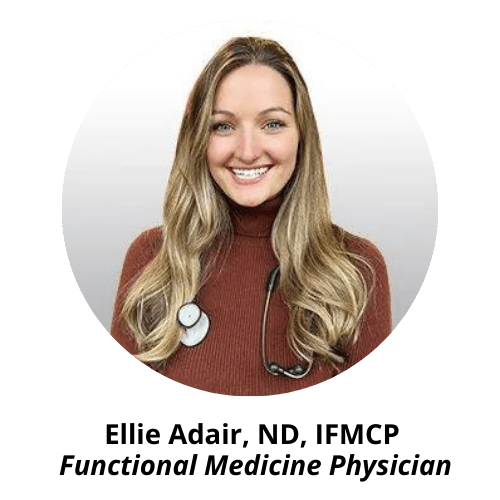
Psoriasis is a complex condition that requires a multifactorial approach. As a Functional Medicine Physician, my job is to guide patients on their journey of healing, addressing the root causes, and empower them with the tools and knowledge to achieve and maintain healthy skin and a healthy body.
Our skin is a reflection of our internal health. By caring for our bodies from the inside out, we can achieve lasting health and vibrant skin.

Resources:
Alesa DI, Alshamrani HM, Alzahrani YA, Alamssi DN, Alzahrani NS, Almohammadi ME. The role of gut microbiome in the pathogenesis of psoriasis and the therapeutic effects of probiotics [retracted in: J Family Med Prim Care. 2021 Feb;10(2):1076]. J Family Med Prim Care. 2019;8(11):3496-3503. Published 2019 Nov 15. doi:10.4103/jfmpc.jfmpc_709_19
De Pessemier B, Grine L, Debaere M, Maes A, Paetzold B, Callewaert C. Gut-Skin Axis: Current Knowledge of the Interrelationship between Microbial Dysbiosis and Skin Conditions. Microorganisms. 2021;9(2):353. Published 2021 Feb 11. doi:10.3390/microorganisms9020353
Kapoor B, Gulati M, Rani P, Gupta R. Psoriasis: Interplay between dysbiosis and host immune system. Autoimmun Rev. 2022;21(11):103169. doi:10.1016/j.autrev.2022.103169
Myers B, Brownstone N, Reddy V, et al. The gut microbiome in psoriasis and psoriatic arthritis. Best Pract Res Clin Rheumatol. 2019;33(6):101494. doi:10.1016/j.berh.2020.101494
Taheri Sarvtin M, Shokohi T, Hajheydari Z, Yazdani J, Hedayati MT. Evaluation of candidal colonization and specific humoral responses against Candida albicans in patients with psoriasis. Int J Dermatol. 2014;53(12):e555-e560. doi:10.1111/ijd.12562
Wilchowski SM. The Role of the Gut Microbiome in Psoriasis: From Pathogens to Pathology. J Clin Aesthet Dermatol. 2022;15(3 Suppl 1):S25-S28.
Your Neighborhood
Health Team
Want to schedule and appointment but unsure about your coverage? Easily find out by using our contact us form. We will check your coverage and send you the results!
Contact Us

A Doctor and Mothers Perspective on Autism

Treating Erectile Dysfunction with Functional Medicine

The Gut-Immune Connection: How Your Microbiome Impacts Seasonal Allergies

© 2022 Vida Integrated Health. All Rights Reserved.
This website uses cookies for Marketing Purposes. To learn more, see our Privacy Policy.
CONNECT
LOCATIONS
Seattle
Ravenna
Bellevue
Kirkland
Everett